project-q-system-one-image

IBM IBM Q System One

Insight

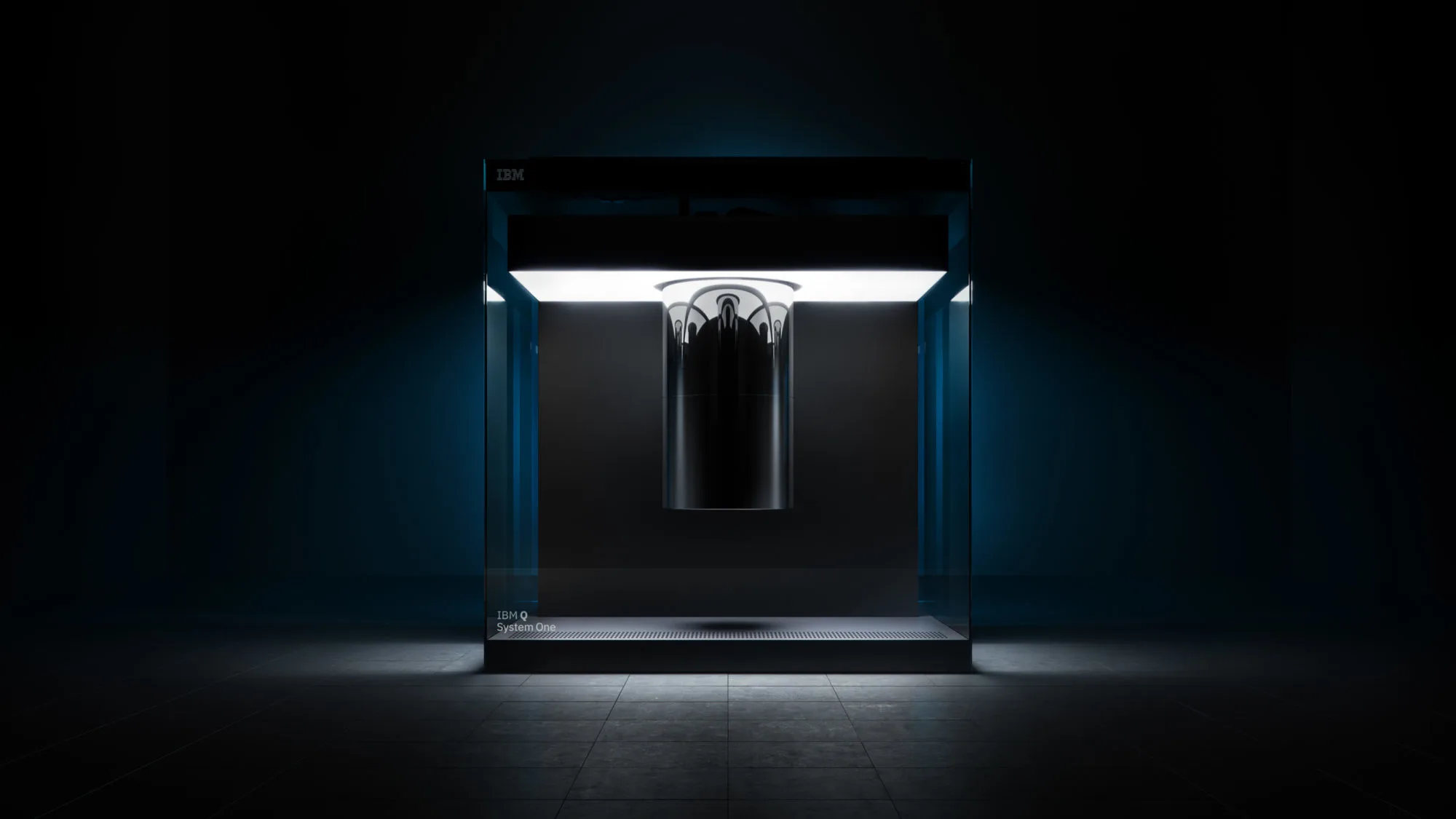
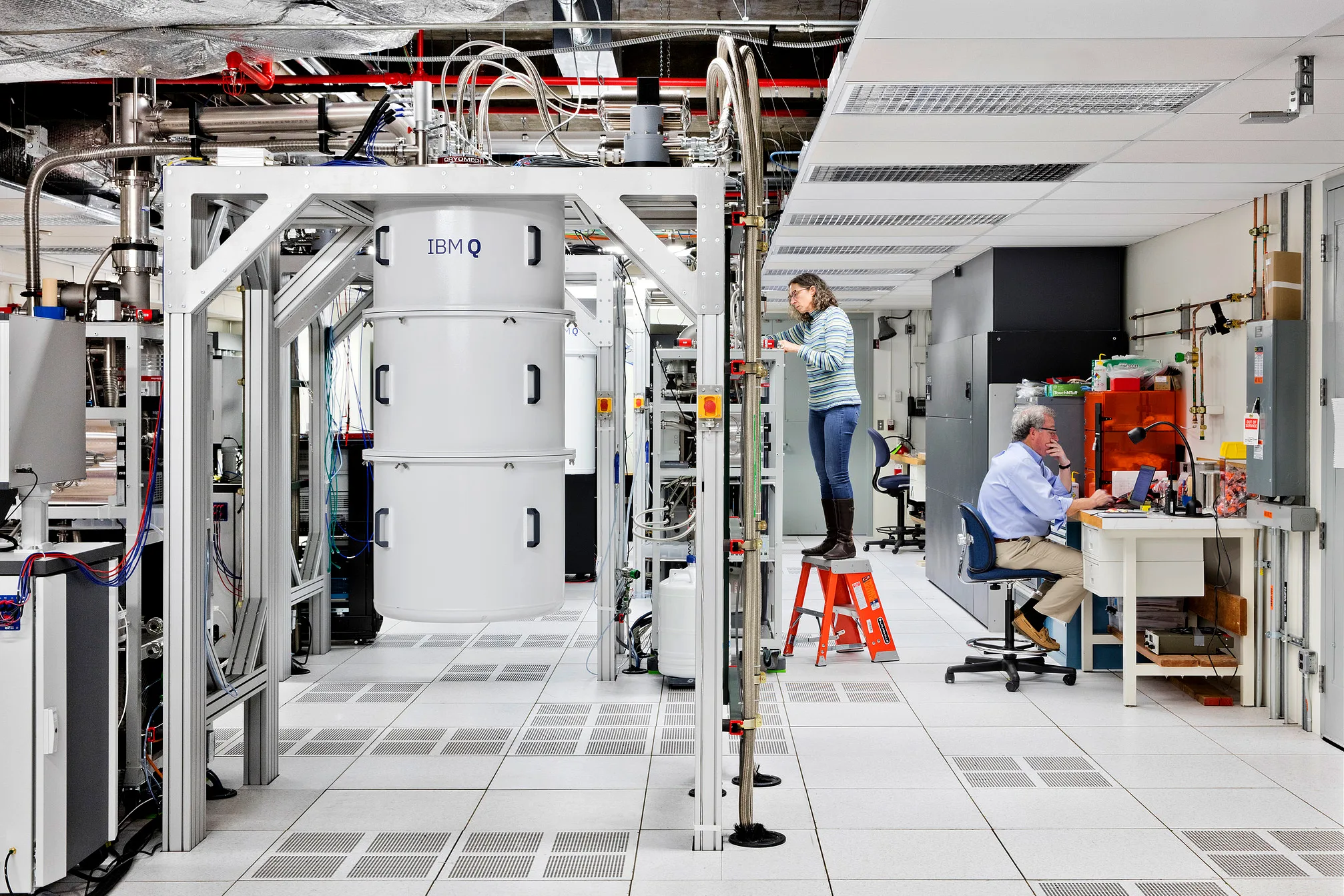
Our partners, Map and Universal, were commissioned to work alongside IBM’s scientists and engineers, to design the world’s first fully integrated universal quantum computing system for scientific and commercial use - IBM Q System One.

Map and Universal defined the vision for the system, where the hardware, spaces and interface are considered as a single coherent experience.

With the potential to solve problems beyond reach of ‘classical’ computers, current IBM quantum computers can be accessed through the cloud today. To make them widely useable beyond the confines of the research lab, information processing and the machines that facilitate it needed to be re-imagined.


A modern laboratory with a large IBM Q quantum computer, a woman standing on a step stool working on equipment, and a man sitting at a desk using a computer. The environment is bright, clean, and technical.
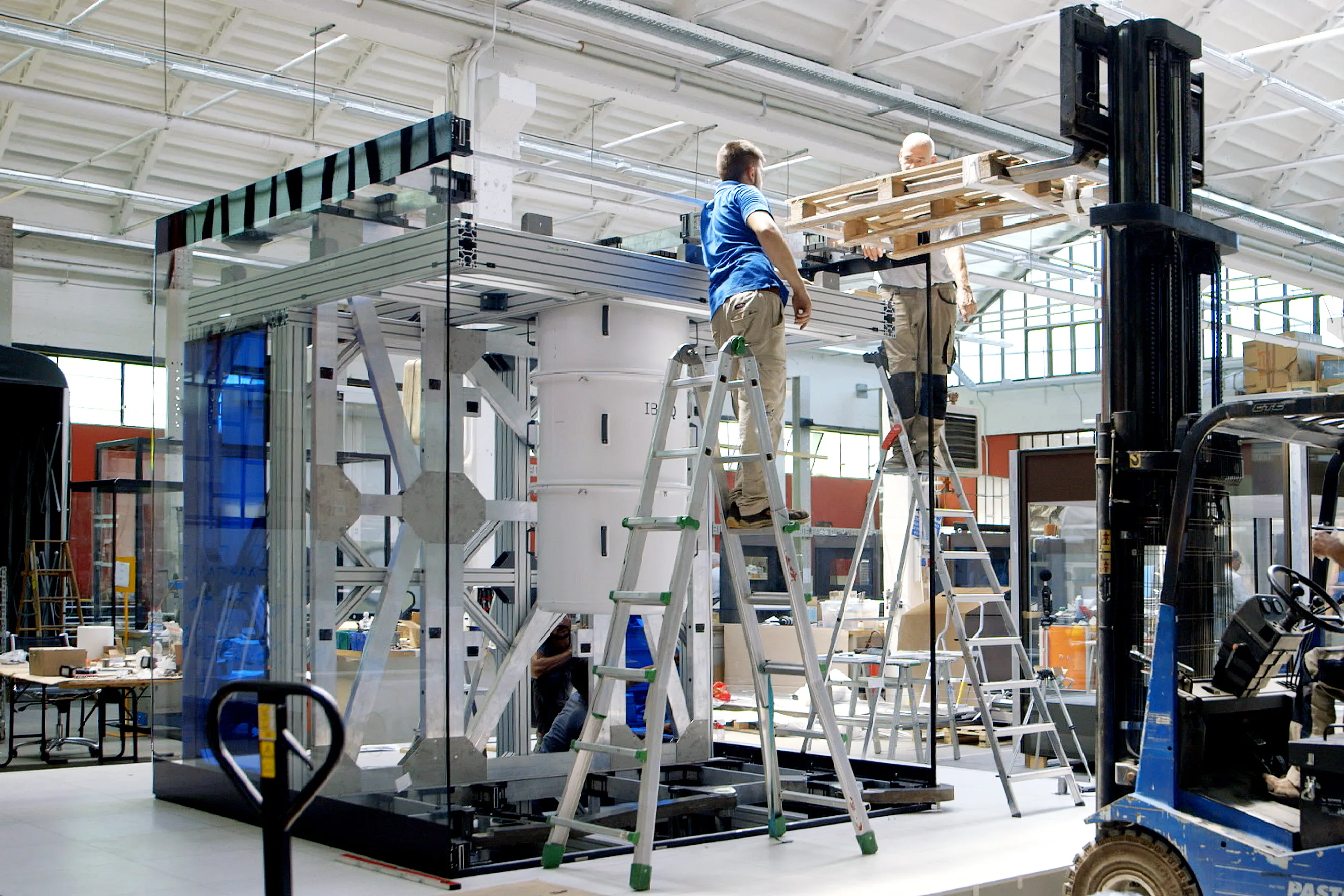
Two workers on ladders assemble or repair a large glass and metal structure indoors, using a forklift to lift materials. The industrial setting includes various tools and machinery in the background.

Idea

In 1957, Thomas J Watson commissioned IBM’s first corporate-wide program.

Encompassing everything from products to buildings and corporate identity, collaborators included design legends such as Charles & Ray Eames, Ero Saarinen and Paul Rand.

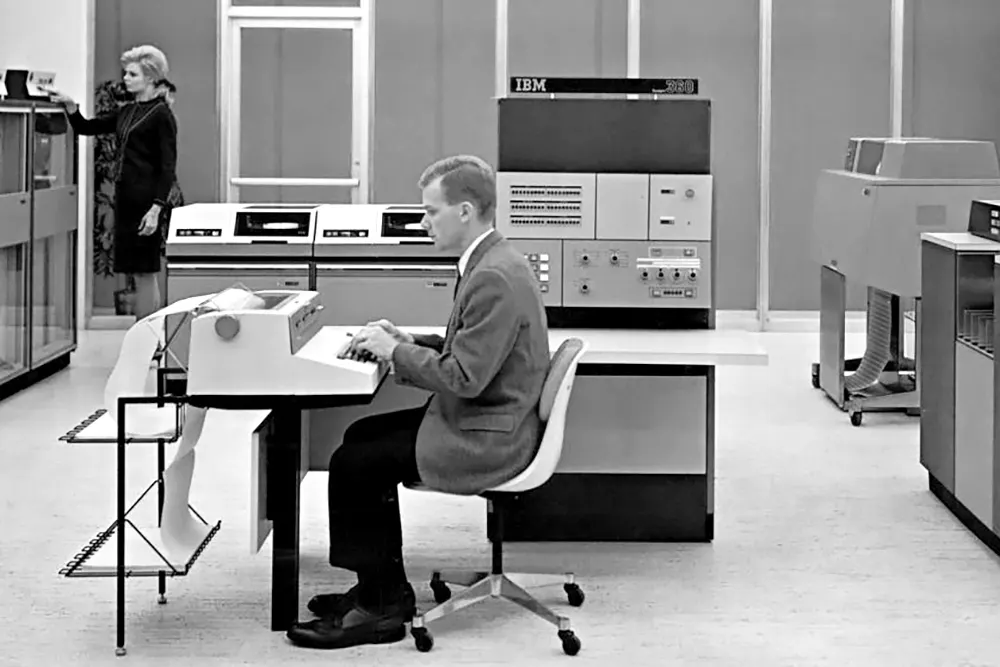
Iconic products such as the IBM System 360 mainframe launched soon after, which revolutionised the world – changing the way businesses thought about computer hardware.

The System 360 made ‘classical’ computing scalable and practical.

In the same way, IBM System Q will democratise quantum computing.


A man sits at a desk typing on an early computer terminal, with large IBM mainframe computers and equipment in the background. A woman stands near additional machines in the room. The scene appears from the mid-20th century.
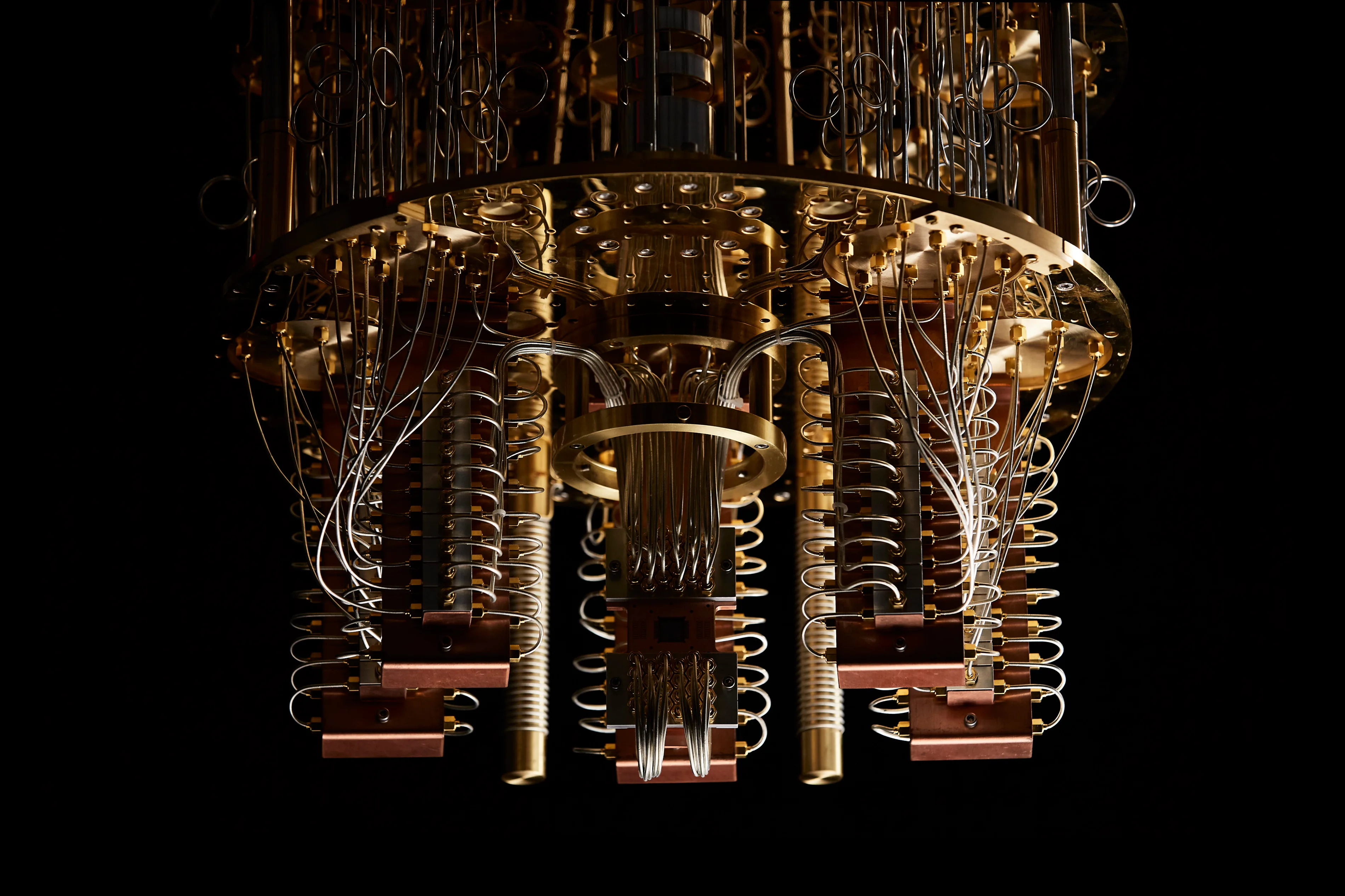
A close-up view of a quantum computer’s intricate hardware, featuring numerous gold and copper wires, coils, and components suspended in a complex, cylindrical structure against a black background.

Impact

Our challenge was to satisfy the computer’s functional demands, whilst defining the archetype that this new form of computing would require.

Over a period of two years, the design direction and performance criteria for the system were developed in collaboration with specialist display case fabricator Goppion, who helped to realise our concept for the outer vitrine and its 3m2 glass panels. Engineered to open effortlessly using roto-translation, easy access simplifies the system’s maintenance and upgrade process while minimising downtime.

The enclosure forms an air tight seal so the integrated system can carry out one of the most challenging aspects of quantum computing: continuously maintaining the quality of qubits used to perform quantum computations.

A second phase of the project, the IBM Q Quantum Computation Center will open later this year in Poughkeepsie, New York.
Related Work

TAG Heuer

Connected Modular 45

TAG Heuer Connected Modular 45 main image

Nike

NBA Connected Jersey

nike-nba-article-01-large-4

Nike+

Training Club

article-01-large

Fortnum & Mason

The Royal Exchange

Fortnum and Mason Royal Exchange main image

What’s your

next frontier?
Footer Fallback Image Gradient
  • Privacy Policy
  • Cookie Policy
  • Perspectives
  • AKQA Companies
  • Sustainability
  • News